Updated: April 2026 | Read Time: 5 mins | Team Opulnz Abode
From Predictions to Reality — How 2026’s Luxury Market Has Outpaced Every Forecast
When the original 2024 trend analysis predicted smart home evolution, sustainability integration, virtual reality property tours, and blockchain in real estate transactions — it was making educated bets on a market still finding its premium identity. In 2026, the reality of India’s luxury market has both validated some of those predictions and delivered surprises that no analysis foresaw.
The most unexpected development of 2025-26: Gurugram overtaking Mumbai. No analyst had that in their forecast two years ago. The systematic factors that made it happen — infrastructure completion, developer quality upgrades, IPO wealth creation — were visible. The speed was not.
Trend 1 — Smart Homes: From Feature to Baseline Expectation
In 2024, smart home automation was a differentiator that developers highlighted in marketing. By 2026, it is a baseline expectation that buyers simply expect. The shift is complete.
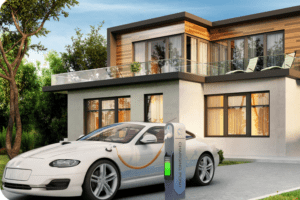
- What has standardised: App-controlled lighting, AC, and security. Video door phones. EV charging provision. Energy monitoring dashboards.
- What is differentiating in 2026: Air purification with real-time PM2.5/PM10 monitoring (Max Estate 128, Birla Arika), home automation integrated with building-level systems (Oberoi Three Sixty North), and predictive maintenance AI that alerts residents to infrastructure issues before they become problems.
- The 2026 luxury buyer expects: Not just smart home controls — but smart building intelligence that manages energy, air quality, water, and security at the community level.
Trend 2 — Sustainability: From Marketing to RERA-Adjacent Requirement
Budget 2026-27’s green home tax deduction (₹1,800 additional annual interest deduction for IGBC/LEED certified homes) has converted sustainability from a nice-to-have into a financially rewarded choice. Developers have responded:
- 87 new IGBC/LEED certified projects were fast-tracked in Q1 2026 across Bengaluru, Pune, and Hyderabad.
- Birla Arika Sector 31 (IGBC Gold Pre-Certified) and Max Estate 128 (IGBC Platinum) are the NCR benchmarks.
- Oberoi Three Sixty North and Emaar Amaris are being designed to achieve IGBC certification from inception.
The 2026 luxury buyer is not just environment-conscious — they have a tangible financial incentive to choose certified projects.
Trend 3 — Space Per Rupee: Bigger Is No Longer Just About Status
The average size of a luxury home sold in Gurugram in 2025 was approximately 5,000 sq ft. This is not aspirational — it is practical. Post-pandemic, the Indian professional family with two work-from-home adults, two school-age children, and domestic staff has genuine space requirements that a 2,500 sq ft apartment cannot satisfy.
- 2024 prediction: Larger homes driven by lifestyle aspirations.
- 2026 reality: Larger homes driven by functional necessity. WFH spaces, dedicated study rooms, home gyms, and separate staff wings are not aspirational — they are practical requirements for the HNI family structure.
- Market response: 4 BHK has become the minimum luxury configuration in NCR. 5 BHK and above are the fastest-growing segment by value. DLF Dahlias at 9,500 sq ft minimum reflects where the top of the market has moved.
Trend 4 — Branded Residences: India Ranks 6th Globally
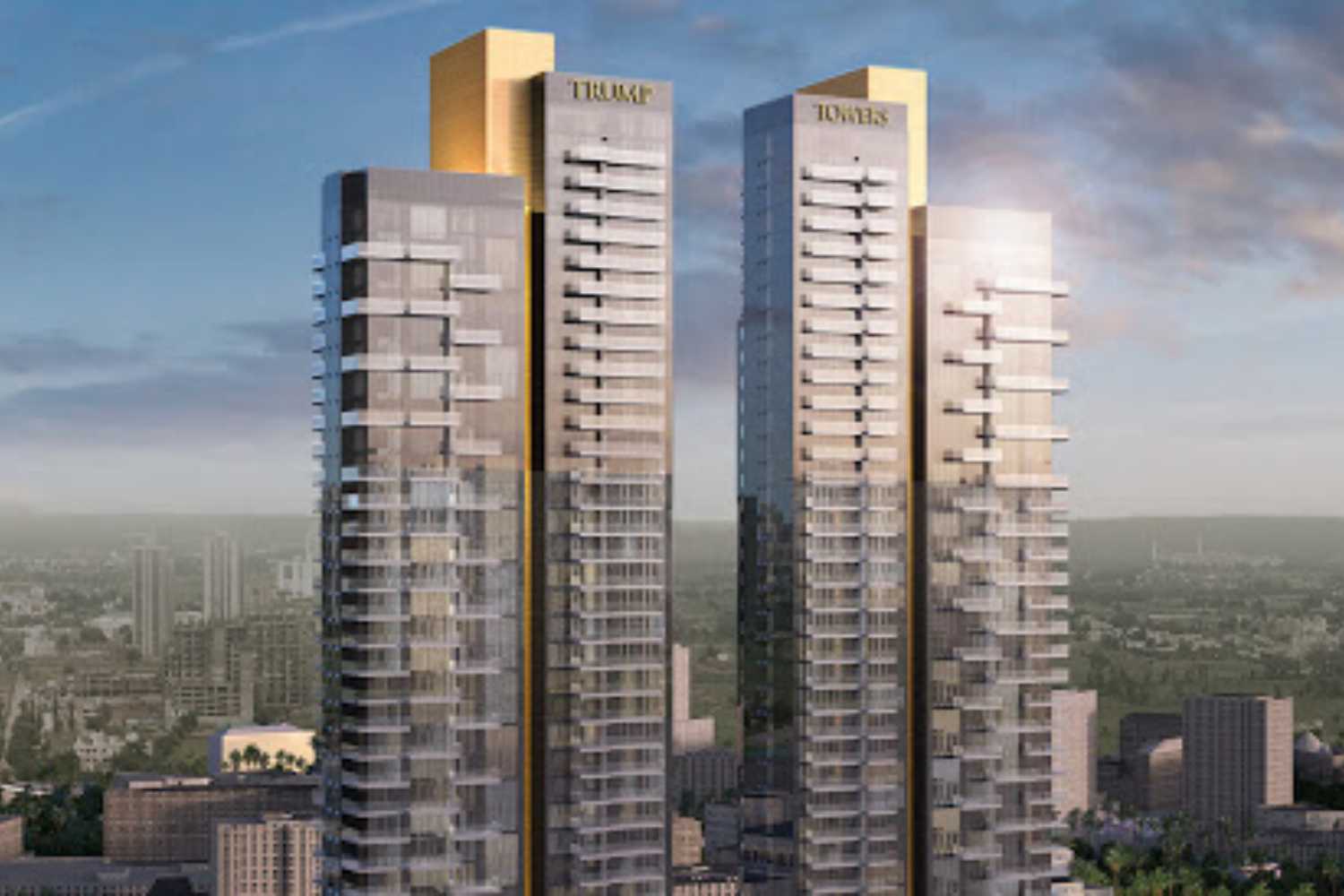
The single most remarkable structural development in India’s luxury market since 2024 has been the pace of branded residence proliferation. India now ranks 6th globally in branded residences — behind established markets like UAE, UK, USA, Thailand, and Singapore.
- Active branded projects in NCR: Trump Towers Noida (M3M-Trump Organization), Westin Residences (Whiteland-Marriott), and potential Ritz-Carlton designation at Oberoi Three Sixty North.
- Pipeline: Multiple international hotel brands evaluating India partnerships. The Bulgari, Six Senses, and St. Regis brands are all reported to be in discussions with Indian developers.
- Buyer premium: Branded residences command 20-40% above comparable unbranded projects. For NRI buyers, the brand recognition reduces perceived risk significantly.
Trend 5 — Virtual Reality and Proptech: Now Table Stakes
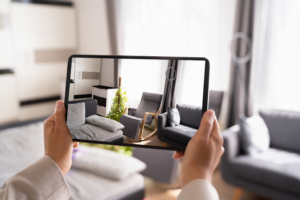
The 2024 prediction of VR property tours reshaping luxury real estate has come true — but in a more nuanced way than predicted. VR is now standard for NRI buyers who cannot visit physically, but it has not replaced site visits for domestic buyers.
- What VR delivers in 2026: Floor plan walkthroughs, material and finish previews, view simulations from specific floors. Accurate enough for NRIs to make shortlist decisions remotely.
- What VR cannot replace: The physical experience of standing in a show apartment, feeling the ceiling height, testing the balcony view, and assessing the surrounding neighbourhood quality.
- AI-powered discovery: Platforms now use AI to match buyer profiles to projects based on lifestyle preferences, commute requirements, and budget optimisation — reducing the research phase from months to days.
Trend 6 — Wellness as Architecture, Not Amenity
The most meaningful evolution in India’s luxury residential design between 2024 and 2026 is the integration of wellness into architecture itself — not just as an amenity list, but as a design philosophy:
- Air purification as standard infrastructure: Max Estate 128’s real-time PM monitoring, Birla Arika’s IGBC Gold certification — wellness baked into the building, not added on top.
- Biophilic design: Godrej Sora’s Japanese-inspired nature integration, DLF Dahlias’ 40-acre Central Park — green is no longer landscaping, it is the central design element.
- Wellness programming: Oberoi Three Sixty North’s planned wellness management, Whiteland Westin’s six wellness pillars — professionally managed well-being, not just gym equipment.
Related Projects on Opulnz Abode
→ Birla Arika Sector 31 Gurgaon — IGBC Gold
→ Max Estates Sector 128 Noida — IGBC Platinum
→ Whiteland Westin Residences Sector 103
→ Oberoi Realty Sector 58 Gurgaon
Further Reading from Superluxere
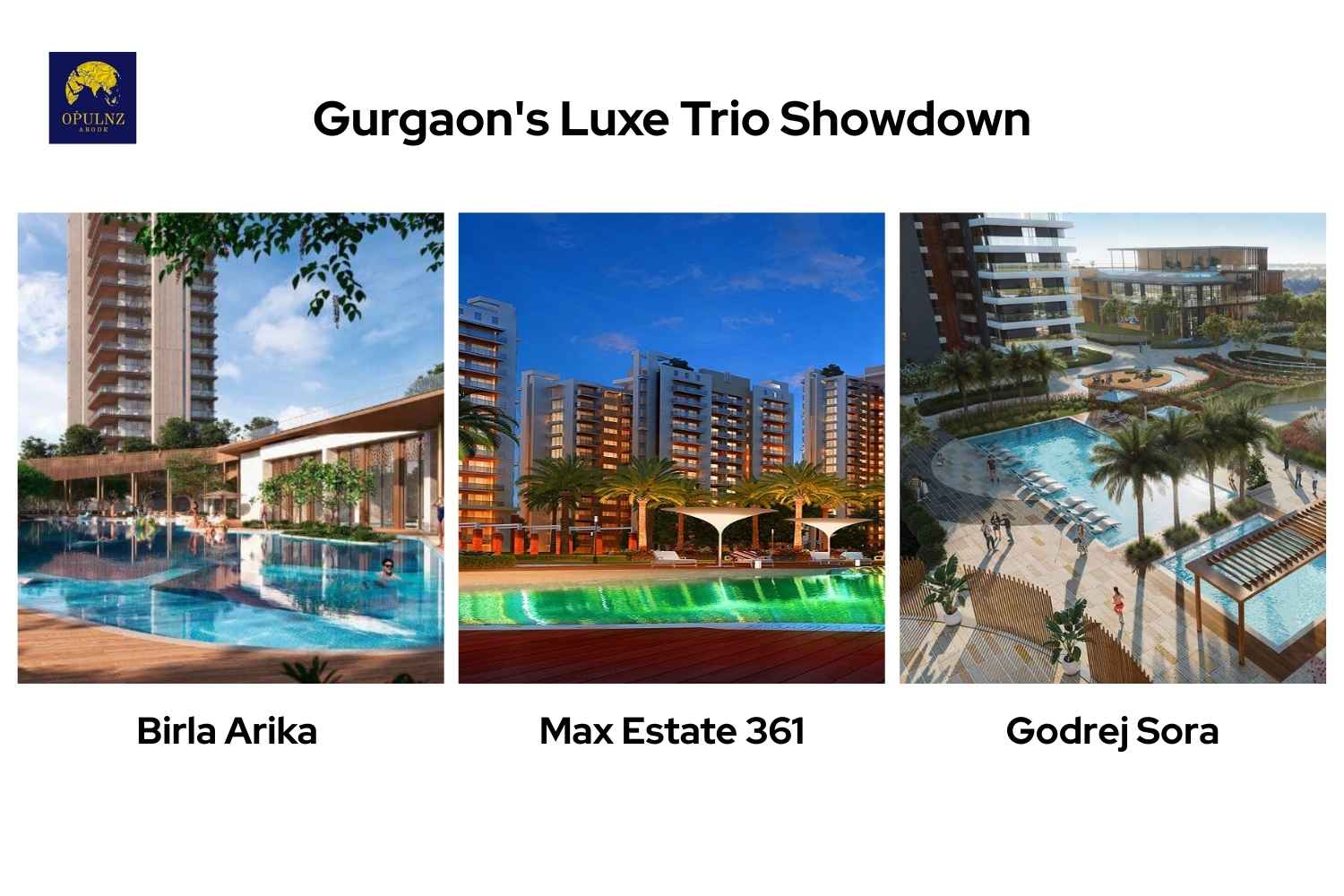
→ Birla Arika vs Max Estate 361 vs Godrej Sora — Gurugram 2026
→ Central Park Studios & Max Terraces: Serviced Apartments Gurugram 2026
→ Sobha Crescent Sector 63A: Location & Appreciation Analysis
→ Sobha Crescent Sector 63A: Price List & Payment Plan
Frequently Asked Questions
What are the biggest luxury real estate trends in India in 2026?
Six structural trends: smart home moving from feature to baseline (air purification and building-level AI now differentiating), sustainability with financial incentives (IGBC certification and Budget 2026-27 tax deduction), space as functional necessity (5,000+ sq ft average in Gurugram), branded residences (India now ranks 6th globally), wellness as architecture (biophilic design, programmed well-being), and AI-powered property discovery compressing the research cycle.
What is India’s ranking in global branded residences?
India ranks 6th globally in branded residences — behind UAE, UK, USA, Thailand, and Singapore. Active NCR branded projects: Trump Towers Noida (Trump Organization), Westin Residences Gurgaon (Marriott), and the potential Ritz-Carlton designation at Oberoi Three Sixty North. International hotel brands including Bulgari, Six Senses, and St. Regis are reportedly evaluating India partnerships.
What is the IGBC green home tax deduction in Budget 2026-27?
Budget 2026-27 introduced an additional ₹1,800 annual interest deduction on home loans for IGBC or LEED certified homes, on top of the existing ₹2,400 Section 24(b) limit. This converts green building certification from a marketing claim into a financially rewarded buyer choice — and has already triggered 87 new certification applications in Q1 2026.
How has the luxury buyer’s definition of ‘smart home’ changed by 2026?
In 2024, smart home meant app-controlled lighting, AC, and security. By 2026, truly smart luxury buildings integrate air purification with real-time PM monitoring, energy management at the building level, predictive maintenance AI, and water conservation systems. Projects like Max Estate 128 (air purification as LiveWell® standard) and Birla Arika (IGBC Gold from inception) represent this evolved standard.
Has VR property tours replaced site visits for luxury buyers in 2026?
For NRI buyers who cannot visit physically, VR has become standard for the shortlisting phase — allowing remote floor plan walkthroughs, material previews, and view simulations from specific floors. For domestic buyers, VR has not replaced site visits — the physical experience of ceiling height, finishes quality, and neighbourhood assessment remains essential for ₹5 crore-plus purchase decisions.
What does wellness as architecture mean in luxury homes in 2026?
Wellness as architecture means well-being is built into the building’s physical DNA, not added as an amenity. Examples: Max Estate 128’s PM2.5/PM10 air monitoring (you breathe better because the building manages indoor air), Birla Arika’s 58% green cover and biophilic design (contact with nature is daily, not occasional), and Whiteland Westin’s six wellness pillars (Move, Eat, Feel, Work, Sleep, Play Well) managed by Westin’s hospitality professionals.
Sources: Mordor Intelligence | IGBC | India Sotheby’s Luxury Report 2025 | Budget 2026-27 | JLL India | Superluxere Research 2026